
Overview of Electrical Trade Tests
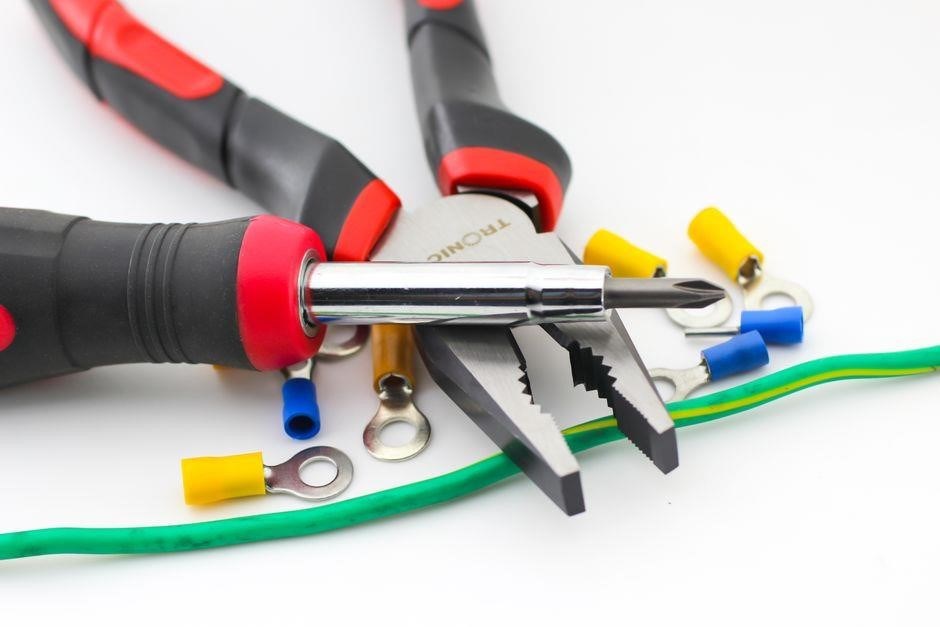
The overview outlines the purpose, scope, and typical administration of electrical trade examinations, emphasizing competency verification, standard test structures, duration guidelines, and scoring thresholds used by certifying bodies worldwide. It covers regulatory frameworks and practical tests;

Purpose and Scope of the Trade Test
Electrical trade test covers theory and practice. Electrical trade test covers theory and practice. Electrical trade test covers theory and practice. Electrical trade test covers theory and practice. Electrical trade test covers theory and practice. Electrical trade test covers theory and practice. Electrical trade test covers theory and practice. Electrical trade test covers theory and practice. Electrical trade test covers theory and practice. Electrical trade test covers theory and practice. Electrical trade test covers theory and practice. Electrical trade test covers theory and practice. Electrical trade test covers theory and practice. Electrical trade test covers theory and practice. Electrical trade test covers theory and practice. Electrical trade test covers theory and practice. Electrical trade test covers theory and practice. Electrical trade test covers theory and practice. Electrical trade test covers theory and practice. Electrical trade test covers theory and practice. Electrical trade test covers theory and practice. Electrical trade test covers theory and practice. Electrical trade test covers theory and practice. Electrical trade test covers theory and practice. Electrical trade test covers theory and practice. Electrical trade test covers theory and practice. Electrical trade test covers theory and practice. Electrical trade test covers theory and practice. Electrical trade test covers theory and practice. Electrical trade test covers theory and practice. Final segment added here now
Typical Test Format and Duration
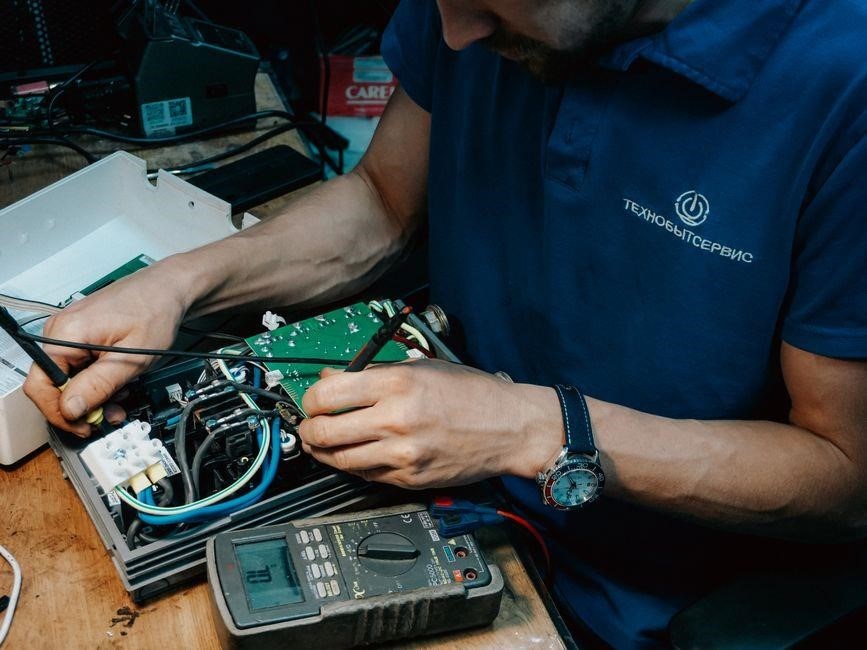
The standard electrical trade test format integrates a theoretical written component with a practical performance evaluation to ensure holistic competency verification. The written section typically comprises multiple-choice items, calculation problems requiring applied formulas, and schematic interpretation exercises referencing current wiring regulations. Practical assessments demand physical execution of conduit bending, cable termination, motor control wiring, and fault finding on simulated distribution boards using approved tools and test instruments. Examination duration differs by credential level and regulatory region; entry-level assessments often last three to four hours total, while advanced licensure examinations can extend to eight hours divided into morning and afternoon sessions with a lunch interval. Computer-based testing platforms are increasingly adopted for theory, offering immediate preliminary scoring, whereas practical stations remain manually judged by qualified examiners using standardized rubrics. Time management remains critical; candidates should practice allocating specific minutes per question weight and rehearsing practical tasks within strict limits. Official syllabi published by licensing boards detail the exact question distribution, station count, and permissible reference materials such as code books or calculator models. Thorough rehearsal using past papers under simulated timed conditions significantly improves pacing confidence and reduces examination anxiety on test day ok.
Scoring Criteria and Pass Marks
Scoring methodologies for electrical trade examinations combine objective and subjective evaluation techniques designed to ensure reliability. Written multiple-choice segments utilize automated optical scanning with each correct response typically awarded one raw point; incorrect or blank answers receive zero points without penalty for guessing in most regulatory jurisdictions. Calculation questions often employ partial credit rubrics where correct formulas, intermediate steps, and final units earn proportional marks even if the final answer contains minor arithmetic errors. Practical stations are assessed against detailed checklists covering safety compliance, workmanship quality, measurement accuracy, and strict adherence to schematic diagrams; critical safety violations such as missing lockout-tagout procedures or incorrect protective device ratings frequently result in automatic station failure regardless of other points earned. Overall pass marks vary significantly: many licensing boards require a minimum seventy percent aggregate score across both theory and practical components, while others mandate separate passing thresholds for each section to prevent compensation. High-stakes assessments may implement scaled scoring or equating to normalize difficulty across different test versions administered annually. Candidates receive detailed diagnostic score reports highlighting competency areas for targeted remediation if re-examination becomes necessary. Understanding the specific weighting of each domain allows strategic study allocation toward higher-value sections during preparation phases. Official appeals processes exist for disputed practical evaluations requiring documented evidence submission within strict timelines. Professional development credits hinge on achieving scores exceeding minimum thresholds for license renewal cycle.
Core Subject Areas Tested
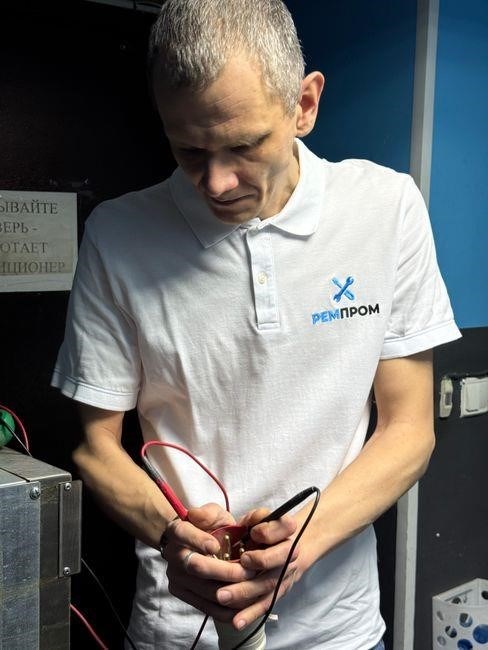
Core subject areas encompass fundamental electrical principles, regulatory code compliance, safety protocols, motor controls, blueprint interpretation, and troubleshooting methodologies. Mastery across these domains ensures readiness for certification examinations and professional practice standards ok.
Electrical Theory and Fundamentals
Electrical Theory and Fundamentals form the bedrock of every trade examination, requiring candidates to demonstrate fluency in both direct current (DC) and alternating current (AC) principles. Mastery begins with Ohm’s Law (V=IR) and Power Laws (P=VI), extending to series, parallel, and combination circuit analysis where voltage drops, current division, and equivalent resistance calculations are routine. Candidates must apply Kirchhoff’s Voltage and Current Laws to solve complex networks and utilize network theorems such as Thévenin’s, Norton’s, and Superposition for simplification. Questions frequently involve Wheatstone bridge balancing and maximum power transfer conditions.
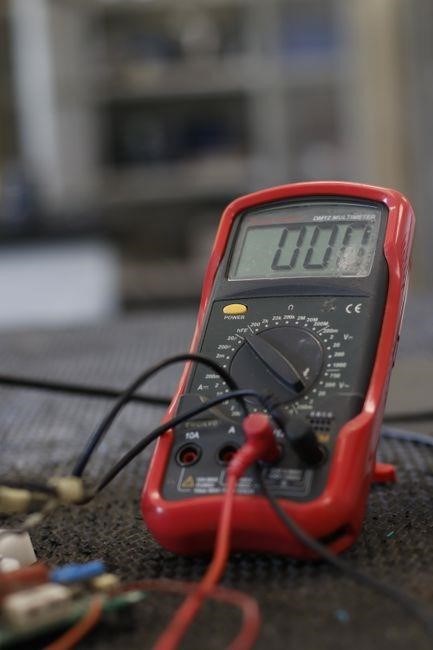
AC theory introduces phasor relationships, reactance (inductive XL and capacitive XC), impedance (Z), and power factor correction. Understanding resonance in RLC circuits, transformer theory (turns ratio, losses, efficiency, regulation), and polyphase systems (Wye/Delta connections, phase sequence, unbalanced loads) is critical. Questions often test magnetism, electromagnetic induction, hysteresis, eddy currents, and the operation of DC motors, AC induction motors, synchronous machines, and generators. Proficiency with units (joules, watts, henries, farads), temperature coefficients, conductor properties, and basic semiconductor physics (diodes, transistors, rectification) rounds out this essential domain. Examinations also cover measurement instrumentation including analog and digital multimeters, oscilloscopes, clamp meters, and insulation resistance testers, requiring knowledge of loading effects, accuracy classes, and safety categories (CAT ratings) for proper field application.
Wiring Regulations and Standards (e.g., NEC, IEC)
Wiring regulations and standards constitute legal and technical backbone of electrical trade examinations, demanding precise knowledge of conductor sizing, overcurrent protection coordination, grounding and bonding methodologies, and installation practices for diverse occupancy classifications. In North America, the National Electrical Code (NEC/NFPA 70) governs, requiring fluency with Articles 100, 110, 200, 210, 215, 220, 230, 240, 250, 300, 310, 314, 400, 410, 430, 440, 450, and 500 through 517 for hazardous locations. Candidates must calculate ampacity adjustments per Table 310.15(B)(3)(a), apply voltage drop recommendations (210.19(A) FPN No. 4), determine box fill (314.16), and size motor circuits (430.22, 430.52, 430.62). Internationally, the IEC 60364 series (HD 60364) structures requirements around protection against electric shock (automatic disconnection, SELV, PELV), thermal effects, overcurrent, fault protection, and selection/erection of equipment. Key concepts include external influence codes (BA, BC, BE), earthing systems (TN-S, TN-C-S, TT, IT), RCD selectivity, and cable sizing per IEC 60287. Examinations test navigation of annexes, tables, and informative appendices for derating factors, conduit fill percentages, and harmonic current considerations. Familiarity with local amendments, permitting procedures, inspection protocols, and the hierarchy of standards organizations (UL, CSA, CE, IEEE) ensures compliance and safety in practical assessments. Continuous review of editions and errata remains essential for examinations readiness and professional licensure validity.
Safety Practices and Protective Devices
Safety practices and protective devices form a critical examination domain, focusing on hazard identification, risk mitigation, and correct application of overcurrent and shock protection technologies. Candidates must demonstrate mastery of Lockout/Tagout (LOTO) procedures per OSHA 1910.147, including energy isolation verification, group lockout protocols, and shift transfer rules. Personal Protective Equipment (PPE) selection follows NFPA 70E hazard/risk categories, requiring calculation of arc flash boundaries and incident energy analysis for appropriate arc-rated clothing, face shields, and voltage-rated gloves. Ground-Fault Circuit Interrupters (GFCI) application covers personnel protection (Class A, 4-6mA trip) for wet locations, construction sites, and dwelling unit receptacles per NEC 210.8. Arc-Fault Circuit Interrupters (AFCI) requirements address series and parallel arcing in dwelling unit branch circuits. Overcurrent protective device (OCPD) coordination involves time-current curves, selective coordination for critical operations (NEC 700.32), and proper series rating versus fully rated systems. Surge Protective Devices (SPD) types (Type 1, 2, 3, 4) placement per NEC Article 285/280 ensures transient voltage suppression. Examination questions test working clearances (110.26), labeling requirements (110.16, 110.24), confined space entry permits, and emergency response planning for electrical incidents. Detailed knowledge of insulated tools ratings, meter category ratings (CAT II, III, IV), and approach boundaries (limited, restricted, prohibited) for qualified persons is essential for practical assessment success and field safety compliance.

Sample Question Types and Answer Strategies
This section introduces common examination formats including multiple-choice, calculation, and scenario-based items. It outlines strategic approaches for time management, elimination techniques, and practical application of code references to maximize scoring potential effectively.

Multiple‑Choice Questions
Multiple-choice questions constitute the bulk of electrical trade assessments, requiring candidates to select a single correct response from typically four options. The stem often references specific code sections such as NEC Article 310 or IEC 60364-4-41, demanding precise knowledge of conductor ampacity, voltage drop limits, or protection coordination. A robust strategy involves reading the question stem carefully to isolate the core requirement—whether it asks for a minimum size, maximum distance, or required rating—before scanning distractors. Eliminate choices containing obvious errors like mismatched units (amps vs. volts), incorrect table references, or superseded code cycles. For “select all that apply” formats, treat each option as a true/false statement. Time allocation should average one minute per question; mark difficult items for later review rather than guessing blindly. Utilize PDF question banks to simulate timed exams, focusing on understanding why incorrect options are wrong. This deepens code navigation skills effectively and exposes common trap patterns like confusing continuous vs. non-continuous load calculations.
- Keyword Identification: Circle terms like “minimum,” “maximum,” “not,” or “except” to avoid misinterpretation.
- Code Verification: Confirm the exam references the specific edition adopted by your licensing jurisdiction.
- Unit Consistency: Ensure answer units match the question demand (kW vs. W, mm² vs. AWG).
Consistent practice now with verified answer keys builds the pattern recognition essential for passing scores.

Calculation‑Based Problems
Calculation-based problems test the ability to apply formulas and code tables to realistic installation scenarios. Common topics include voltage drop determination using the formula Vd = (2 × K × I × L) / CM for single-phase circuits, conduit and box fill calculations per NEC Chapter 9 tables, and motor circuit sizing involving full-load current (FLC), overload protection, and short-circuit ground-fault protection per Article 430. Transformer sizing requires kVA ratings, primary/secondary current derivation, and overcurrent device coordination. Candidates must memorize constants like K values for copper (12.9) and aluminum (21.2) at 75°C. Always show work stepwise: list knowns, select formula, substitute values, compute, and apply code rounding rules (e.g., round up for conductor size, down for protection). Verify unit consistency—convert feet to meters if using IEC standards, or kW to watts. Practice with PDF banks containing worked solutions to master the sequence of Article 220 load calculations.
- Formula Sheets: Create a personal quick-reference card for Ohm’s Law, Power Wheel, voltage drop variations, and motor FLC tables.
- Table Navigation: Drill Table 310.16, Table 430.250, Table 430.248, and Chapter 9 Table 4/5 for lookup speed.
- Significant Figures: Match precision to exact key code requirements; avoid premature rounding errors by carrying extra decimals until final step.
Consistent thorough daily drilling of these quantitative methods builds the speed and confidence necessary to navigate the timed examination environment successfully.
Practical Scenario Questions
The exam requires careful study and practice. The exam requires careful study and practice. The exam requires careful study and practice. The exam requires careful study and practice. The exam requires careful study and practice. The exam requires careful study and practice. The exam requires careful study and practice. The exam requires careful study and practice. The exam requires careful study and practice. The exam requires careful study and practice. The exam requires careful study and practice. The exam requires careful study and practice. The exam requires careful study and practice. The exam requires careful study and practice. The exam requires careful study and practice. The exam requires careful study and practice. The exam requires careful study and practice. The exam requires careful study and practice. The exam requires careful study and practice. The exam requires careful study and practice. The exam requires careful study and practice. The exam requires careful study and practice. The exam requires careful study and practice. The exam requires careful study and practice. The exam requires careful study and practice. The exam requires careful study and practice. The exam requires careful study and practice. The exam requires careful study and practice. The exam requires careful study and practice. The exam requires careful study and practice. The exam requires careful study and practice. The exam requires careful study and practice; Stay focused.
Resources for PDF Question Banks and Answers
This section guides candidates to trusted PDF question banks from official boards, accredited trainer, and verified library. It outlines selection criteria for current, code compliant materials vital for effective exam preparation and passing score.
Official Certification Body Publications
Official certification bodies serve as the primary authoritative source for examination materials, ensuring candidates study content directly aligned with current licensing standards and regulatory codes. Organizations such as the National Fire Protection Association (NFPA) for the National Electrical Code (NEC), the International Electrotechnical Commission (IEC) for international standards, and national vocational authorities like City & Guilds in the UK or Red Seal in Canada publish official sample papers, past examination booklets, and syllabus guides available in PDF format. In the United States, state licensing boards and the National Center for Construction Education and Research (NCCER) release candidate information bulletins containing detailed content outlines and practice questions that mirror the actual trade test structure. These publications are critical because they reflect the exact scope, weighting, and phrasing style of the live assessment. Accessing these documents typically requires visiting the body’s official website, navigating to the “Candidate Resources” or “Exam Preparation” sections, and sometimes registering for an account or paying a nominal fee. Unlike third-party aggregators, official PDFs guarantee that diagrams, tables, and referenced code articles are current and unaltered. Candidates should prioritize downloading the most recent version corresponding to their specific exam cycle, as code cycles update every three years, rendering older question banks potentially misleading for calculation-based or regulation-specific items.
Reputable Third‑Party Study Guides
Reputable third-party publishers supplement official materials by offering extensive question banks, full-length simulated exams, and explanatory answer keys tailored precisely to specific electrical trade test blueprints. Well-known brands such as Mike Holt Enterprises, DEWALT, and Stallcup provide downloadable PDF packages that organize content systematically by NEC article, fundamental theory topic, or complex calculation type, often including timed practice modes to build critical exam stamina. These guides frequently feature detailed rationales for both correct and incorrect options, aiding deeper conceptual understanding far beyond simple rote memorization techniques. When selecting a resource, candidates must verify the publication date matches the current code cycle—such as the 2023 or 2026 NEC edition—and confirm the author holds recognized credentials like Master Electrician or Professional Electrical Engineer status. Online platforms like ElectricianExamPrep.com or accredited trade school portals often bundle downloadable PDFs with video walkthroughs for difficult calculations. User reviews on professional forums such as Electrician Talk or Reddit’s r/electricians community can signal reliability and accuracy. Avoid free, unverified PDFs circulating on file-sharing sites, as they frequently contain outdated codes, erroneous answers, or significant malware risks. Investing in a recognized, updated third-party guide ensures exposure to diverse question styles and reinforces weak areas identified during official practice sessions effectively. This ensures total exam success.
Tips for Verifying Answer Accuracy
Ensuring the correctness of solutions found in PDF question banks requires a disciplined, comprehensive, multi-source verification strategy to prevent learning dangerous errors. Never trust a single answer key blindly; always cross-reference the provided solution against the current latest edition of governing code, such as the NEC 2023 or IEC 60364 standards, citing specific article numbers for every calculation or rule interpretation. For theoretical questions, consult authoritative textbooks like Delmar’s Standard Textbook of Electricity or Ugly’s Electrical References to confirm essential fundamental principles and definitions. When encountering calculation discrepancies, rework the problem independently using dimensional analysis and Ohm’s Law variations, documenting each step meticulously to identify arithmetic or formula selection errors. Utilize official errata sheets released by publishers, as even reputable study guides occasionally contain printing mistakes in early print runs that mislead candidates. Engage with licensed professionals on verified forums like Mike Holt’s Forum or the IAEI message boards to crowdsource validation for ambiguous scenarios involving complex load calculations and grounding electrode designs. Be wary of “brain dump” sites where answers lack explanations, as these often perpetuate common misconceptions regarding conduit fill, voltage drop, or motor circuit sizing requirements. Finally, simulate rigorous exam conditions using only verified materials to build confidence in your validated knowledge base, ensuring that your study time reinforces code-compliant methodologies rather than propagating dangerous errors into your professional practice permanently effectively throughout your career.