
Volleyball Weight Training Program: A Comprehensive Plan
Gain the stamina, agility, and strength needed for volleyball with an exercise plan effective at the gym and at home.
Explore resources like YouTube Studio for channel analytics and management, alongside premium membership options for an enhanced experience.
Utilize a volleyball weight training PDF to structure your workouts, ensuring proper form and progressive overload for optimal performance and injury prevention.
Volleyball demands a unique blend of power, agility, and endurance. A well-structured weight training program is crucial for enhancing performance and minimizing injury risk. This introduction highlights the importance of integrating strength and conditioning specifically tailored for the sport’s dynamic movements.

Leveraging a volleyball weight training PDF provides a systematic approach to building a robust foundation. These PDFs often detail periodized training plans, ensuring athletes peak during crucial phases of the season.
Furthermore, resources like YouTube Studio offer valuable insights into performance analytics, aiding in program adjustments. Understanding your channel’s data, alongside a dedicated PDF, allows for a data-driven approach to training. Consider YouTube Premium for an ad-free experience while accessing training content. Proper form, detailed within the PDF, is paramount for maximizing gains and preventing setbacks.
II. Understanding the Physical Demands of Volleyball
Volleyball is characterized by explosive movements: jumping, spiking, blocking, and rapid changes in direction. These actions require significant lower body power, core stability, and upper body strength. A comprehensive volleyball weight training PDF should address these specific demands, outlining exercises that mimic game-like movements.
Analyzing your channel’s performance via YouTube Studio can parallel understanding an athlete’s physical limitations. Just as data informs content strategy, it guides training intensity.
Consider the need for endurance to sustain performance throughout matches. A well-designed PDF will incorporate conditioning drills. Utilizing YouTube Premium ensures uninterrupted access to instructional videos. Prioritizing proper technique, as detailed in the PDF, is vital for injury prevention and maximizing athletic potential.
III. Key Muscle Groups for Volleyball Players
A targeted volleyball weight training PDF must prioritize muscle groups crucial for performance. Lower body strength, focusing on quads, hamstrings, and glutes, is paramount for jumping and explosive movements. Core muscles provide stability and power transfer. Upper body strength, particularly shoulders and arms, is essential for spiking and blocking.
Similar to navigating YouTube Studio for channel insights, understanding these muscle groups is foundational.
The PDF should detail exercises for each group, emphasizing proper form. YouTube’s resources can supplement understanding of exercise technique. A balanced program, as outlined in the PDF, prevents imbalances and reduces injury risk, mirroring a well-managed YouTube channel.
III.A. Lower Body Strength – Legs & Core
A comprehensive volleyball weight training PDF will dedicate significant attention to lower body strength. Exercises like squats and lunges build power in quads, hamstrings, and glutes – vital for jumping. Core work, including anti-rotation and stabilization exercises, provides a stable base for explosive movements.
Think of it like managing a YouTube channel; a strong foundation is key. The PDF should detail sets, reps, and progression.
Just as YouTube Studio offers analytics, tracking progress in these exercises is crucial. Prioritizing these areas enhances vertical leap, agility, and overall athletic performance, mirroring a successful online presence.
III.B. Upper Body Strength – Shoulders & Arms
A well-structured volleyball weight training PDF must incorporate upper body exercises. Shoulder presses and bench presses build strength for spiking and blocking, while pull-ups and chin-ups enhance overall upper body power. These exercises are as crucial as managing a YouTube channel’s content.
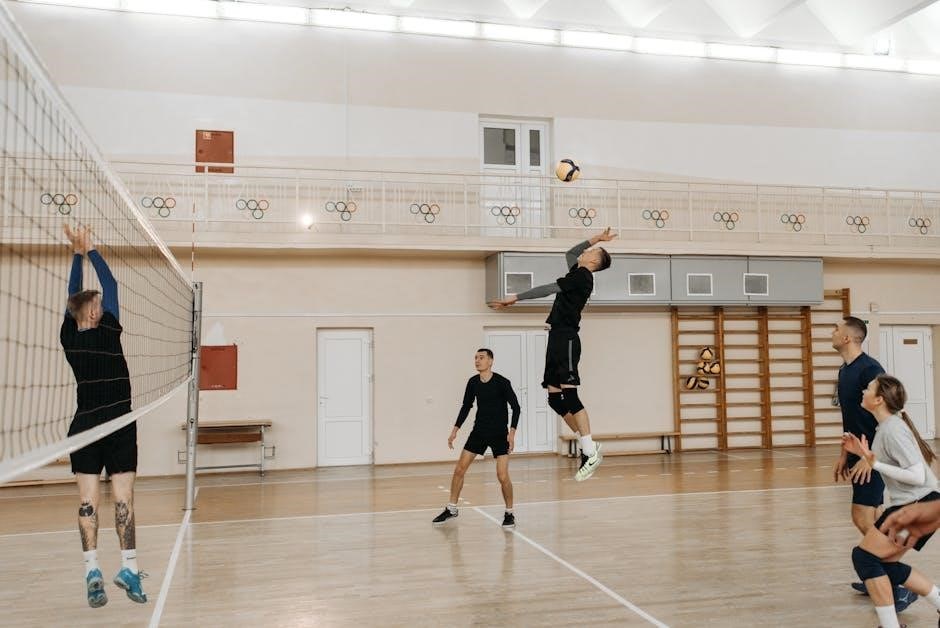
The PDF should outline specific routines, mirroring the detailed guidance found in YouTube help videos.
Strong shoulders and arms improve hitting velocity and block effectiveness. Consistent training, tracked like channel analytics in YouTube Studio, is vital for progress and injury prevention, ensuring peak performance on the court.
IV. Program Structure & Principles
A comprehensive volleyball weight training PDF should detail a periodized program. This means phasing training – off-season, pre-season, and in-season – mirroring the dynamic nature of a YouTube channel’s content schedule.
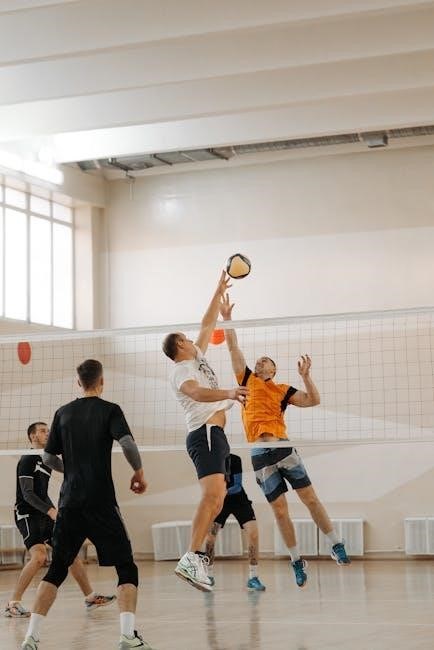
The PDF must outline training frequency and volume, balancing intensity with recovery, similar to monitoring YouTube channel analytics.
Progressive overload is key; gradually increasing weight or reps. Proper structure, like navigating YouTube Studio, ensures optimal gains and minimizes injury risk. Consistency, like regular YouTube uploads, is paramount for long-term success.
IV.A. Periodization: Phases of Training
A well-structured volleyball weight training PDF will emphasize periodization. The off-season focuses on building a strength base, akin to establishing a YouTube channel’s foundation. Pre-season transitions to power and explosiveness, mirroring content planning for a launch.
In-season maintenance prioritizes strength endurance and injury prevention, like consistent YouTube uploads maintaining audience engagement. Each phase requires adjusted volume and intensity.
The PDF should detail specific exercises for each phase, ensuring peak performance during competition, much like optimizing YouTube videos for maximum reach.
IV.B. Training Frequency & Volume
A comprehensive volleyball weight training PDF must outline training frequency and volume. Typically, 3-4 sessions per week are optimal, mirroring a consistent YouTube upload schedule for audience retention.
Volume, measured in sets and reps, varies by phase. Off-season emphasizes higher volume, building a base like establishing a YouTube channel’s content library. Pre-season reduces volume, increasing intensity for power, similar to focused promotional campaigns.
In-season maintains strength with lower volume, preventing fatigue, akin to regular YouTube community engagement. The PDF should provide clear guidelines for adjusting these variables.
V. Warm-up Routine for Volleyball Weight Training
A detailed volleyball weight training PDF should prioritize a dynamic warm-up. Begin with 5-10 minutes of light cardio, like jogging, mirroring the initial engagement needed for a new YouTube video.
Follow with dynamic stretches – arm circles, leg swings, torso twists – preparing muscles for exertion, similar to crafting compelling video thumbnails. Include volleyball-specific movements: shoulder rotations, hip openers, and light jumping.
This prepares joints and increases blood flow, reducing injury risk. The PDF should illustrate each exercise with clear instructions and repetitions, ensuring proper form, much like a YouTube tutorial.

VI. Core Strength Exercises for Volleyball
A comprehensive volleyball weight training PDF must emphasize core stability. Volleyball demands powerful rotations and jumps, requiring a strong core for efficient force transfer, akin to managing a successful YouTube channel.
Include exercises like planks (various variations), Russian twists, and bird-dogs. The PDF should detail proper form to prevent injury, similar to YouTube’s focus on creator safety guidelines.
Focus on both anti-rotation and stabilization exercises. These build resilience against twisting forces. A well-structured PDF will provide progressive overload, mirroring the growth strategies for a YouTube subscriber base.
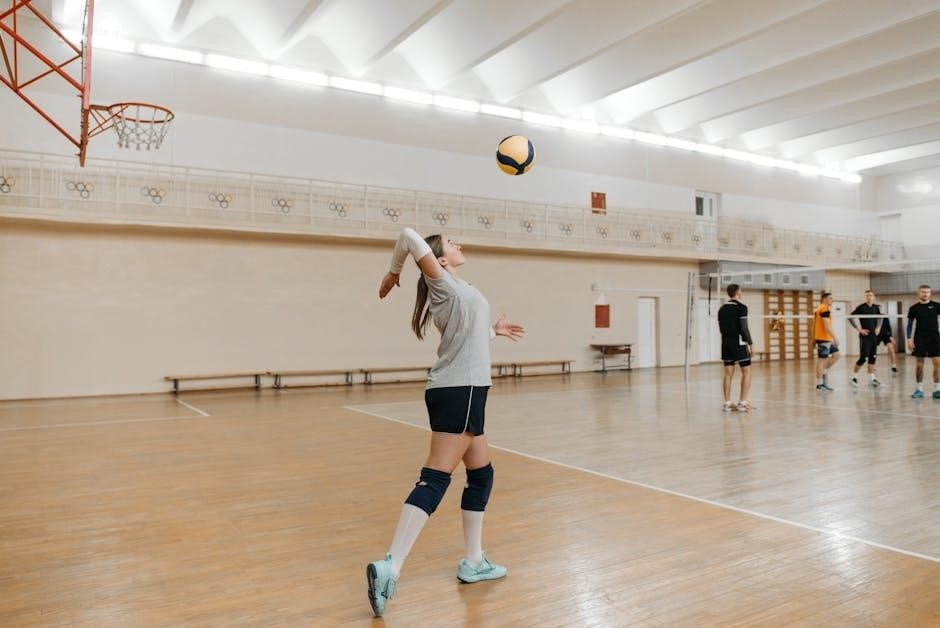
VI.A. Anti-Rotation Exercises
A detailed volleyball weight training PDF should prioritize anti-rotation exercises. These build resistance to twisting forces experienced during spiking, blocking, and quick lateral movements, much like managing a dynamic YouTube channel.
Key exercises include Pallof presses (with cable or band), and single-arm farmer’s carries. The PDF must illustrate correct technique, emphasizing maintaining a stable spine. Think of it as providing clear instructions, similar to YouTube’s help videos.
Progressive overload is crucial – increase resistance or lever length. These exercises enhance core stability and power transfer, vital for volleyball performance and injury prevention.
VI.B. Core Stabilization Exercises
A comprehensive volleyball weight training PDF must include core stabilization exercises. These build a strong foundation for all movements, mirroring the stability needed to manage a successful YouTube channel and its analytics.
Planks (various variations), bird-dogs, and dead bugs are essential. The PDF should detail proper form, focusing on maintaining a neutral spine and preventing lower back arching. Consider it like providing clear guidance, similar to YouTube Studio tutorials.
Focus on controlled movements and holding positions for specified durations. These exercises improve core endurance and control, crucial for volleyball agility and power.
VII. Lower Body Exercises for Volleyball
A well-structured volleyball weight training PDF prioritizes lower body strength. This section details exercises to enhance jumping ability, agility, and explosive power – mirroring the dynamic nature of a successful YouTube channel’s growth.
Squats (back, front), lunges (forward, reverse, lateral), and plyometrics (box jumps, depth jumps) are fundamental. The PDF should illustrate proper technique, emphasizing full range of motion and controlled landings. Think of it as providing clear, step-by-step instructions, like YouTube’s help videos.
Progressive overload is key; gradually increase weight or resistance. These exercises build leg strength and power, vital for volleyball performance.
VII.A. Squats (Back Squats, Front Squats)
Your volleyball weight training PDF must detail both back and front squats. Back squats build overall lower body strength, mirroring the comprehensive approach of YouTube Studio for channel management.
Front squats emphasize quadriceps and core engagement, crucial for volleyball’s explosive movements. The PDF should include detailed form cues: chest up, back straight, controlled descent. Like a YouTube tutorial, visuals are essential.
Progressive overload – increasing weight gradually – is vital. Start with bodyweight squats, then add resistance. Proper form prevents injury, ensuring long-term athletic development, similar to maintaining a healthy YouTube community.
VII.B. Lunges (Forward, Reverse, Lateral)
A comprehensive volleyball weight training PDF should incorporate forward, reverse, and lateral lunges. These exercises enhance single-leg strength, balance, and agility – vital for court movement, much like navigating YouTube Studio’s analytics dashboard.
Forward lunges mimic volleyball’s stepping patterns. Reverse lunges target glutes and hamstrings. Lateral lunges improve side-to-side agility. The PDF must detail proper form: controlled descent, knee alignment, and core engagement.
Include variations like walking lunges or adding dumbbells. Progressive overload is key; start with bodyweight and gradually increase resistance. Prioritize form to prevent injury, mirroring the careful content creation process on YouTube.
VII.C. Plyometrics (Box Jumps, Depth Jumps)
A well-structured volleyball weight training PDF must include plyometrics like box jumps and depth jumps. These explosive movements build power crucial for vertical leaps and quick reactions, similar to navigating YouTube’s diverse content.
Box jumps improve explosive leg strength. Depth jumps enhance reactive strength and jump height. The PDF should detail appropriate box heights based on athlete level. Emphasize soft landings to minimize impact, akin to careful channel management in YouTube Studio.
Beginners should start with lower boxes and focus on technique. Incorporate plyometrics 2-3 times weekly, allowing for adequate recovery. Prioritize quality over quantity, mirroring the importance of high-quality content on YouTube.
VIII. Upper Body Exercises for Volleyball
A comprehensive volleyball weight training PDF should dedicate significant attention to upper body strength. Volleyball demands powerful serves, spikes, and blocks, requiring robust shoulder and arm muscles, much like a creator needs a strong YouTube presence.
Exercises like bench press (barbell and dumbbell) build pushing strength; Shoulder press (barbell and dumbbell) develops overhead power. Pull-ups and chin-ups enhance pulling strength and back stability. The PDF should outline sets, reps, and progression schemes;
Proper form is paramount to prevent injuries, similar to adhering to YouTube’s community guidelines. Consider incorporating variations to target different muscle fibers and enhance overall upper body development.
VIII.A. Bench Press (Barbell & Dumbbell)
A well-structured volleyball weight training PDF must include detailed instructions for the bench press, both barbell and dumbbell variations. This exercise builds crucial pushing strength for powerful spikes and blocks, mirroring the need for a strong channel presence on platforms like YouTube.
The PDF should specify proper form: controlled descent, slight arch in the back, and full range of motion. It should also detail progressive overload – gradually increasing weight or reps. Dumbbell variations enhance stability and address muscle imbalances.
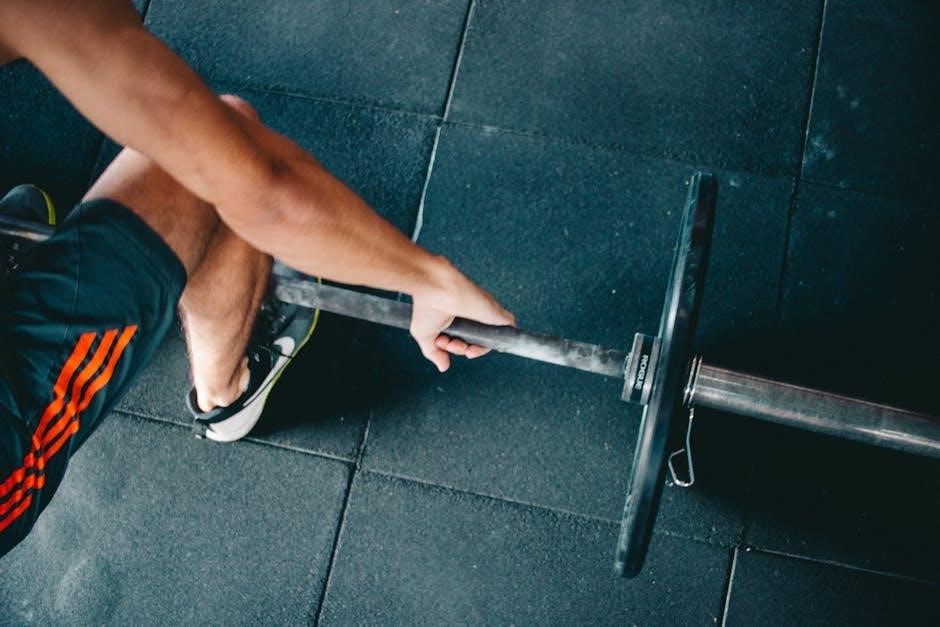
Safety is key; always use a spotter, especially with heavier weights. Consider incorporating incline and decline variations for comprehensive chest development.
VIII.B. Shoulder Press (Barbell & Dumbbell)
A comprehensive volleyball weight training PDF should prioritize shoulder strength, featuring both barbell and dumbbell shoulder presses. This builds the power needed for overhead serving and blocking, similar to managing a successful YouTube channel requiring consistent content.
The PDF must detail proper technique: controlled movement, core engagement, and avoiding excessive back arching. Dumbbell presses improve stability and address imbalances. Progressive overload is crucial – gradually increasing weight or reps over time.
Prioritize safety; use a spotter for heavier barbell lifts. Incorporate variations like Arnold presses for enhanced shoulder development. Remember, consistent effort yields results.
VIII.C. Pull-ups & Chin-ups
A well-structured volleyball weight training PDF must include pull-ups and chin-ups for upper body strength, mirroring the dedication needed to manage a YouTube channel. These exercises build back and bicep strength, vital for powerful hitting and blocking actions.
The PDF should offer modifications for varying strength levels – assisted pull-ups or lat pulldowns for beginners. Proper form is paramount: full range of motion, controlled descent, and avoiding swinging. Chin-ups (palms facing you) emphasize biceps more.
Progressive overload is key; aim to increase reps or sets. Consistent practice builds the necessary strength and endurance for peak volleyball performance.
IX. Sample Volleyball Weight Training Program (PDF Focus)
A comprehensive volleyball weight training PDF should detail a phased program, much like managing a YouTube channel requires consistent content and engagement. It should outline exercises, sets, reps, and rest periods for each phase – off-season, pre-season, and in-season.
The PDF must include warm-up and cool-down routines. Sample workouts should target key muscle groups: lower body (squats, lunges, plyometrics), upper body (bench press, shoulder press, pull-ups), and core.
Periodization is crucial; the PDF should explain how to adjust volume and intensity throughout the season. It should also emphasize proper form and injury prevention.
X. Program for Off-Season
The off-season, like building a YouTube presence, demands foundational work. A volleyball weight training PDF for this phase should prioritize building a base of strength and addressing muscle imbalances. Focus on hypertrophy – increasing muscle mass – with moderate weight and higher repetitions (8-12 reps).
Include compound exercises like squats, deadlifts, bench press, and overhead press. Don’t neglect core stability work. This phase allows for greater training volume, preparing the body for more intense pre-season demands.
Prioritize proper form over lifting heavy weights, mirroring the need for quality content over rapid growth.
XI. Program for Pre-Season
Transitioning to pre-season, much like optimizing a YouTube channel for peak performance, requires a shift in focus. Your volleyball weight training PDF should now emphasize power and explosiveness. Reduce repetitions (3-6 reps) and increase weight, incorporating Olympic lifts like cleans and snatches, if appropriate and with proper coaching.
Plyometrics become crucial – box jumps, depth jumps, and medicine ball throws – to enhance vertical jump and reactive strength. Maintain core stability work, but integrate more dynamic exercises. This phase prepares the neuromuscular system for the demands of competition.
Prioritize speed and power over sheer strength.
XII. In-Season Maintenance Program
Similar to consistently uploading content to a YouTube channel, in-season training demands consistency, but with reduced volume. Your volleyball weight training PDF should now prioritize maintaining strength and power gains, preventing fatigue, and minimizing injury risk.
Focus on 2-3 brief (45-60 minute) lifting sessions per week, using moderate weights (60-75% of 1RM) and higher repetitions (8-12 reps). Continue core work and incorporate lighter plyometrics for maintenance. Prioritize recovery – adequate sleep, nutrition, and active recovery sessions.
Avoid maximal lifts that could lead to overtraining. The goal is preservation, not progression.
XIII. Injury Prevention Exercises
Just as YouTube offers resources for troubleshooting technical issues, a comprehensive volleyball weight training PDF must include injury prevention. Volleyball’s repetitive motions and high impact demand proactive measures.
Incorporate dynamic stretching before workouts and static stretching post-workout. Focus on strengthening rotator cuff muscles, scapular stabilizers, and hip abductors/external rotators. Include exercises targeting ankle stability and proprioception – crucial for landing safely.
Your PDF should detail exercises like band pull-aparts, YTWLs, single-leg balance drills, and plyometric progressions. Consistent implementation, similar to regular YouTube uploads, builds resilience and minimizes injury risk.
XIV. Nutrition for Volleyball Players
A well-structured volleyball weight training PDF isn’t complete without a nutrition guide, much like YouTube’s diverse content library. Fueling performance requires a strategic approach.

Prioritize a diet rich in lean protein for muscle repair and growth, complex carbohydrates for sustained energy, and healthy fats for hormone production. Hydration is paramount – encourage consistent water intake throughout the day, especially during training.
The PDF should outline pre- and post-workout nutrition strategies, emphasizing quick-digesting carbs and protein post-exercise. Consider including sample meal plans and supplement recommendations (with appropriate disclaimers), mirroring YouTube’s informative video format.
XV. Recovery Strategies
A comprehensive volleyball weight training PDF must dedicate a section to recovery, akin to YouTube Studio’s tools for creator well-being. Adequate recovery is as crucial as the training itself, preventing overtraining and maximizing gains.
The PDF should detail active recovery techniques like light cardio and stretching, alongside passive methods such as sleep optimization (aim for 7-9 hours) and proper nutrition.
Include information on foam rolling and massage for muscle soreness, mirroring YouTube’s helpful tutorial videos. Emphasize the importance of listening to the body and adjusting training volume based on recovery status, similar to monitoring channel analytics.
XVI. Monitoring Progress & Adjustments
A well-designed volleyball weight training PDF should outline methods for tracking progress, much like the YouTube Studio dashboard provides channel analytics. Regularly assess performance metrics – weight lifted, reps completed, jump height – to gauge effectiveness.
The PDF should encourage athletes to log their workouts and subjective feelings (fatigue, soreness). Based on this data, adjustments to the program are vital.
If progress plateaus, consider increasing weight, modifying exercises, or altering training volume. Like YouTube’s known issues page, acknowledge potential setbacks and offer solutions. Periodically reassess goals and adapt the program accordingly.
XVII. Importance of Proper Form
A comprehensive volleyball weight training PDF must prioritize proper exercise technique above all else. Just as YouTube help videos offer step-by-step tutorials, the PDF should include detailed instructions and visual aids for each exercise.
Incorrect form dramatically increases injury risk and diminishes training effectiveness. Emphasize controlled movements and full range of motion. Athletes should start with lighter weights to master technique before increasing the load.
Consider including a section on self-assessment or encouraging video recording for form checks, similar to utilizing YouTube Studio to review content. Prioritizing form ensures long-term athletic development.

XVIII. Utilizing a Volleyball Weight Training PDF
A well-designed volleyball weight training PDF serves as a centralized hub for your program, much like YouTube Studio is for creators. It should outline the entire plan, including warm-ups, exercises, sets, reps, and rest periods.
Look for PDFs that offer periodization – dividing the training year into phases (off-season, pre-season, in-season). The PDF should be easily accessible on various devices, allowing for convenient gym or home workouts.
Consider PDFs with video links (like those found on YouTube) demonstrating proper form. Regularly reviewing and adjusting the PDF based on progress, similar to monitoring channel analytics, is crucial.
XIX. Common Mistakes to Avoid
When utilizing a volleyball weight training PDF, avoid treating it as a rigid, inflexible script. Just as YouTube creators adapt to audience feedback, you must adjust the program based on your body’s response.
Common errors include neglecting proper form – prioritize technique over weight, referencing video demonstrations if needed. Another mistake is skipping warm-ups or cool-downs, vital for injury prevention.
Don’t increase weight or volume too quickly; progressive overload is key, but gradual. Ignoring pain signals is also detrimental. Treat your body like a valuable asset, not a machine!
XX. Resources & Further Learning
Beyond your volleyball weight training PDF, expand your knowledge through diverse platforms. YouTube offers a wealth of instructional videos, covering exercise technique and injury prevention – explore channels dedicated to strength and conditioning.
YouTube Studio provides tools for creators to analyze performance, mirroring how you should track your training progress. Consider exploring paid YouTube memberships for ad-free access to premium content.
Consult with certified strength and conditioning specialists for personalized guidance. Remember to verify information from multiple sources, ensuring credibility and safety. Continuous learning is crucial for sustained improvement!